-
Europe turns its scrutiny to the Muslim Brotherhood's influence networks
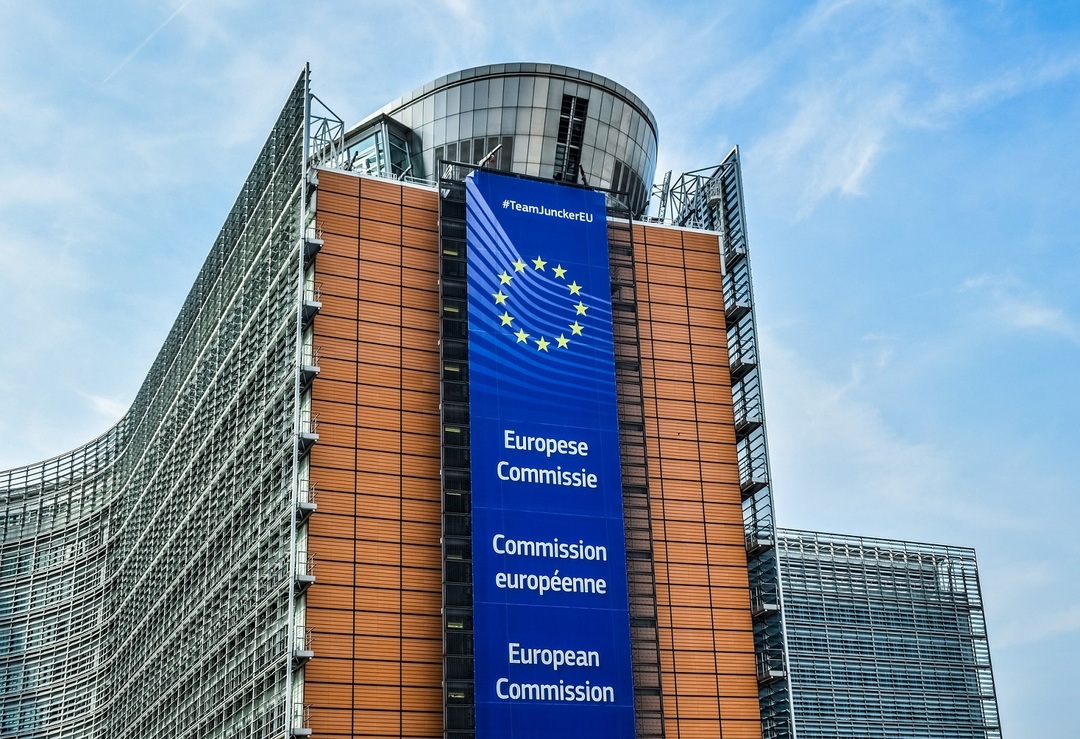
Concerns across Europe over the Muslim Brotherhood are no longer confined to violence or extremist cells. Law enforcement authorities and legislators in several European states now also monitor the funding, mosques, associations, schools and charities that they say the group uses to build long-term networks of influence within European societies and institutions.
Developments in Dublin, Paris, Berlin and Brussels in 2026 show the issue moving from scattered warnings into security planning and legislation. The European Union has not designated the Brotherhood a terrorist organisation, but officials and parliaments in several member states now track its funding, networks and influence alongside any risk of violence.
Hidden Political Islam in Dublin
Assistant Garda Commissioner Michael McElgunn, head of the Garda National Crime and Security Intelligence Service, warned a Dublin conference in September about networks that sustain violent political extremism, according to Grant and the Irish Examiner platforms.
McElgunn noted concerns about a "hidden 'political Islam'" among groups such as the Muslim Brotherhood, which he suggested blocked integration, the Irish Examiner reported. He also named the ultra-conservative Christian right as a source of rhetorical and financial support for the extreme right wing, according to the report. Garda officials told the conference that Ireland also faces terrorism linked to Northern Ireland, four Islamist-inspired attacks in three years, a disrupted far-right plot to bomb a mosque, and online networks such as the "Com", the newspaper reported.
The conference took place amid an overhaul at Clonskeagh Mosque in Dublin. The Al Maktoum Foundation, which is linked to Dubai's rulers, set up and funds the mosque and recently directed a restructuring of its management and religious school, according to the Irish Examiner. Longstanding concerns over links at the mosque to the Muslim Brotherhood, which is banned in the UAE, informed the clear-out, the newspaper reported.
Money and Mosques in Brussels
In the European Parliament, Finnish MEP Sebastian Tynkkynen of the European Conservatives and Reformists (ECR) group described what he called a Brotherhood plan to "Islamize Europe" through funding and mosque construction, in a clip circulated by the social media account Visegrad24.
In March, MEPs Bert-Jan Ruissen of the ECR and Tomáš Zdechovský of the European People's Party hosted a separate conference at the Parliament titled "Safeguarding Europe: Exposing the Growing Threat of the Muslim Brotherhood," according to its organisers.
The Forum of European Muslim Youth and Student Organisations (FEMYSO) organised a European Action Day Against Islamophobia in Brussels in September amid accusations that it is close to the Brotherhood. FEMYSO rejects the accusations and says it has no affiliation with any political party, group or ideological movement.
France Legislates, Germany Warns
France has gone furthest in turning the issue into legislation. On 22 January 2026, the National Assembly adopted by 157 votes to 101 a non-binding resolution calling on the European Commission to begin a procedure to place the Brotherhood movement and its leaders on the EU list of terrorist organisations, franceinfo reported. Les Républicains placed the text on the agenda during their reserved parliamentary day, and it passed over the opposition of the entire left, with support from the government camp and the Rassemblement National, according to franceinfo. The Assembly has published the adopted text on its website.
On 5 May, the Senate adopted by 208 votes to 124 a bill against "Islamist entryism" tabled by Bruno Retailleau, according to the Senate. The bill's authors describe entryism, historically associated with the Brotherhood, as a covert effort to infiltrate education, sport and associations, the Senate said. The text would allow authorities to block the construction of places of worship, dissolve associations accused of circumventing the law on religious grounds and freeze their assets, and it creates a new offence of undermining the fundamental principles of the Republic, Le Club des Juristes reported. The bill has passed to the National Assembly and is not yet law. The Interior Ministry is preparing its own bill on the same issue, Localtis reported.
The Senate bill draws on a report on "the Muslim Brotherhood and political Islam in France" commissioned by the government and partly made public in May 2025. The report counted 139 Muslim places of worship linked to the Brotherhood and 68 more considered close to the federation, spread across 55 departments, Public Sénat reported. Those sites represent 7 percent of France's 2,800 Muslim places of worship, according to the report. The report identified 21 schools linked to the movement, with a combined 4,200 pupils, Public Sénat reported. The report describes the Musulmans de France association as the "national branch" of the Brotherhood, Reuters reported.
In Germany, agencies for the protection of the constitution have warned of what they call "strategic Islamism," which seeks long-term political and social goals without relying primarily on violence.
Brandenburg Interior Minister Jan Redmann said the Brotherhood "does not attack our democracy with open violence, but creeps in through the back door," according to a statement his ministry issued on 4 June. Redmann said members of the group engage in social work and push into political bodies, with the aim of gaining acceptance and eventually public funding, the ministry said. The ministry described the approach as a "perfidious dual strategy," the Evangelische Zeitung reported. Redmann spoke ahead of the publication of Brandenburg's annual constitutional protection report, which warns of a deliberate infiltration of society by the Brotherhood, the Tagesspiegel reported.
Washington Raises the Bar
The European activity coincided with a move by US authorities. On 13 January 2026, the State Department designated the Lebanese Muslim Brotherhood as a Foreign Terrorist Organization and a Specially Designated Global Terrorist, and designated its leader, Muhammad Fawzi Taqqosh, as a Specially Designated Global Terrorist, Secretary of State Marco Rubio said in a statement. The Treasury designated the Egyptian and Jordanian branches as Specially Designated Global Terrorists for providing material support to Hamas, according to the statement. Rubio described the designations as a first step under Executive Order 14362, which President Donald Trump issued on 24 November 2025, Homeland Security Today reported.
The Egyptian Muslim Brotherhood rejected the designation and said it would pursue all legal avenues to challenge it, the Associated Press reported. Egypt's government welcomed the US move, Egyptian Streets reported.
The French Assembly's resolution cites Jordan's decision of 23 April 2025 to ban all Brotherhood activities, close its offices and begin confiscating its assets, according to the adopted text.
Security and political bodies in these countries now describe the danger attributed to the Brotherhood as a structure of influence that runs through funding, mosques, associations, education and youth organisations, rather than only as a risk of direct violence.
However, questions under examination in Dublin, Brussels, Paris and Berlin now extend beyond the group's relationship with violence to its sources of funding, the management of its institutions and the links between mosques, associations and cross-border political movements. The measures under discussion will depend on whether authorities can prove those links with legal evidence and whether they can separate action against the Muslim Brotherhood and its networks from measures that affect European Muslims who have no connection to it.