-
Simon Griffiths After Winning Silver in Çanakkale: Mohammad Al Tabbaa Deserved the Win Nationalities Fade Away in the W
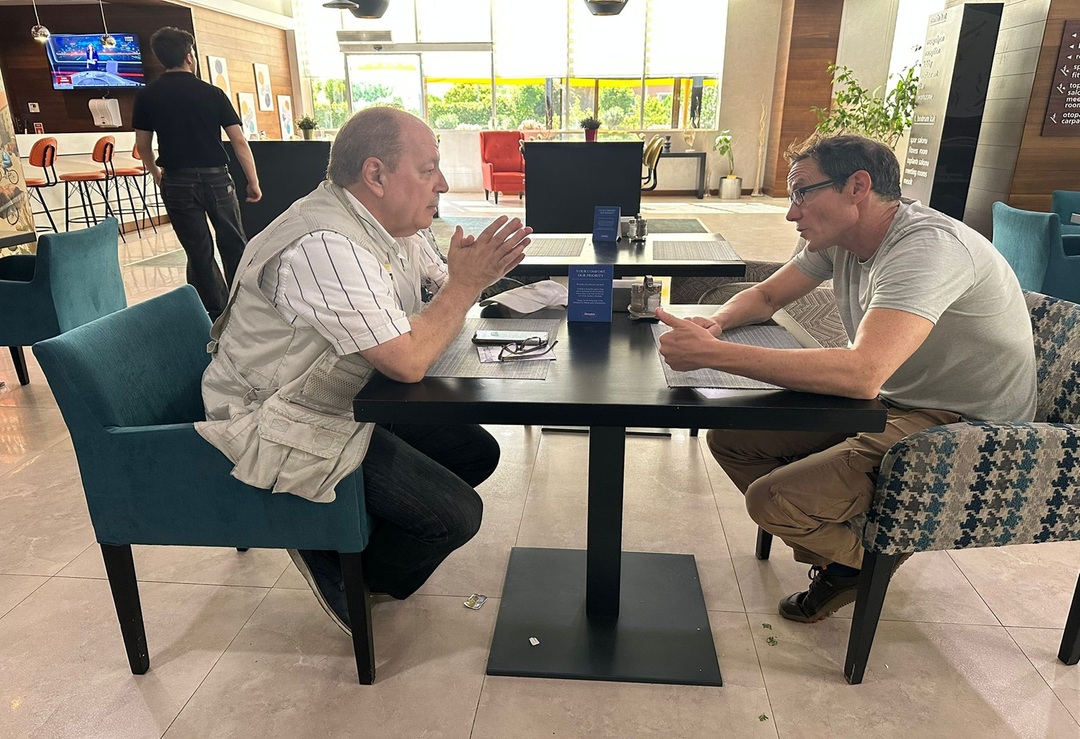
Istanbul - Interview by Tayssir AlKojak
The historic Dardanelles Strait in the Turkish city of Çanakkale witnessed intense competition during the 5-kilometre open-water swimming race, which brought together swimmers from several countries.
Syrian swimmer Mohammad Al Tabbaa claimed first place and the gold medal after completing the race in 50:05.29, finishing more than a minute and a half ahead of British swimmer Simon Griffiths, who took second place.
To learn more about what happened during the race and the challenges swimmers faced in the waters of the Dardanelles, we spoke with Griffiths about the organisation of the event, the difficulty of choosing the right route through the currents, and Al Tabbaa’s winning performance.
First of all, how would you rate the organisation of this year’s race across the Dardanelles?
Simon Griffiths: The organisation was excellent. Registration opened two days before the event, and the organising team was friendly and helpful. All the information was clear, and the boat tour to familiarise swimmers with the course before the race was also extremely useful.
How challenging was the race from a technical perspective once you were in the water?
Simon Griffiths: That is actually one of the most interesting aspects of the race. The shortest way across the Dardanelles is a straight line, but because of the currents, it is not necessarily the fastest.
The correct route varies depending on the speed of each swimmer. A faster swimmer can take a shorter, more direct route while working with the current, whereas a slower swimmer may need to swim at a wider angle and against the current, allowing it to gradually carry them towards the finish.
The strength of the current also varies across the width of the strait, and there can even be counter-currents in certain areas. This means that the fastest route can sometimes resemble a gentle S-shape.
That is what makes the race so interesting and challenging: you can never know with complete certainty what the perfect route will be at every moment.
As an experienced long-distance open-water swimmer, how do you determine your position and direction during a race like this?
Simon Griffiths: It is almost impossible for a swimmer to determine their exact position in relation to the current, regardless of how experienced they are. Sunlight can also make it difficult to see landmarks on shore.
Achieving the fastest possible time therefore requires a combination of swimming speed, endurance, navigation and sighting skills as well as a little bit of luck.
Mohammad Al Tabbaa finished first, more than a minute and a half ahead of you. What did you think of his performance and the time he achieved?
Simon Griffiths: I spoke to Mohammad Al Tabbaa after the race, congratulated him on his victory and told him how impressed I was with his performance.
He told me that the current had carried him slightly past the finish line and that he had to swim a short distance back against the current to reach the finish.
That makes the fast time he achieved, combined with the tactics he used, even more impressive and confirms that his victory was thoroughly deserved.
I was also very happy to have joined him for our final training session together in the Bosphorus before I returned to London.
The leading positions featured swimmers from Syria, the United Kingdom, Australia and other countries. What does open-water swimming tell us about competition, sportsmanship and the bonds between athletes from different parts of the world?
Simon Griffiths: When you are in the water, it is difficult to know much about your competitors — or your fellow swimmers, as I prefer to call them. You do not know their nationalities or even their age categories.
During the race, swimmers often form small groups. This helps with navigation and can increase speed because swimming behind others reduces drag. It also gives you a greater sense of safety.
So you are competing against the swimmers around you, but at the same time you are also helping one another.
Of course, every swimmer will do everything they can to get ahead and reach the finish first, particularly because you do not know which category the other swimmers belong to, and you do not want to risk losing your position.
But as soon as the race is over, everyone shakes hands and congratulates one another.
A swimmer’s nationality makes no difference in the water. What brings us all together is our shared passion for swimming and our mutual respect for the training, commitment and tremendous effort it takes to reach the finish line.